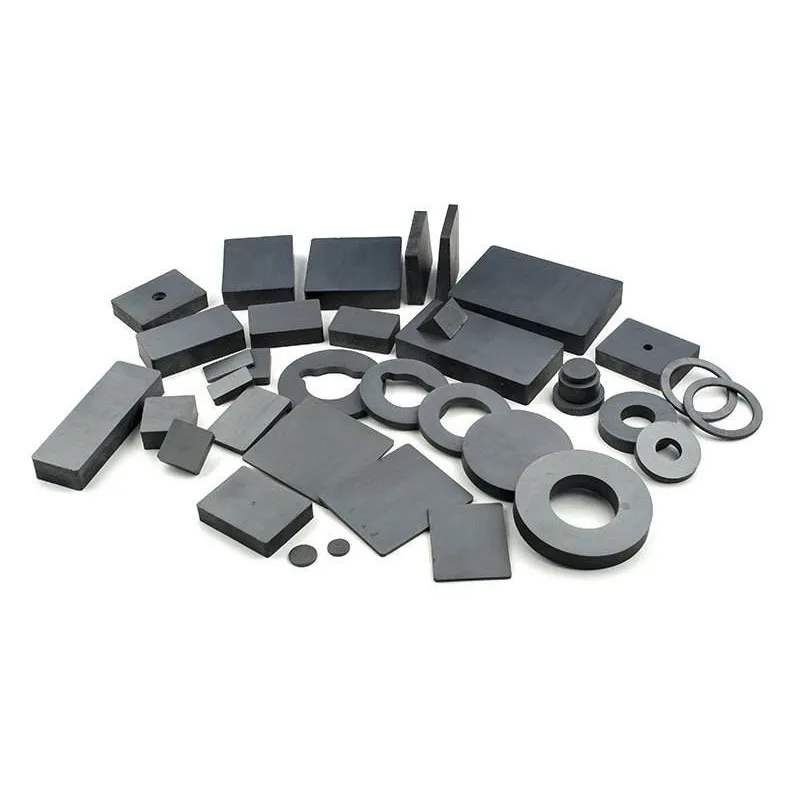
Sintered neodymium iron boron (NdFeB) magnets currently command approximately 80% of the global NdFeB magnet market, a dominance rooted in their exceptional magnetic properties. Manufactured through a powder metallurgy process—including pulverization, pressing, sintering, and machining—sintered magnets offer high remanence, coercivity, and energy product, making them ideal for applications requiring strong magnetic fields. For instance, in high-performance motors, wind turbines, and precision electronics, sintered NdFeB magnets like the N52 grade (as featured by
AIM Magnet) deliver unmatched strength, with energy products reaching up to 52 MGOe.
AIM Magnet, a leading manufacturer established in 2006, exemplifies this dominance with its annual production capacity of 500 tons, supported by 300+ advanced machines. The company’s ISO, ROSH, and REACH certifications underscore the reliability of sintered magnets, which have solidified their market leadership in industries demanding high-performance solutions. Insert image: Sintered NdFeB magnet production process or N52 grade product shot.
Despite sintered magnets’ prevalence, bonded NdFeB magnets are emerging as the fastest-growing segment, driven by their design flexibility and cost-effectiveness. Bonded magnets are produced by mixing NdFeB powder with polymer binders (e.g., epoxy, nylon) and forming them through injection molding or compression molding—allowing complex geometries, thin-walled structures, and integrated features that cater to evolving industry needs.
Key growth drivers for bonded magnets include:
-
Design Versatility: They can be molded into intricate shapes, such as the magnetic components used in wireless charging modules (e.g., MagSafe magnets) or tiny sensors, aligning with AIM Magnet’s portfolio of customized magnetic solutions.
-
Lightweight Characteristics: In electronics and automotive applications, bonded magnets offer a 30-50% weight advantage over sintered counterparts, supporting lightweight design trends.
-
Lower Production Costs: The molding process eliminates post-machining, reducing manufacturing time and expenses.
While bonded magnets have lower magnetic performance (energy products typically 8-15 MGOe), their adaptability is fueling a projected CAGR of 7-9% through 2030. Insert image: Bonded magnet injection molding process or product application in consumer electronics.
The market’s dual landscape reflects a balance between performance and flexibility. Sintered magnets retain their stronghold in high-power applications (e.g., industrial motors, medical MRI devices), while bonded magnets carve out niches in consumer electronics, automotive sensors, and miniaturized devices. AIM Magnet’s one-stop solution model—offering both standard and customized
neodymium magnets—highlights how manufacturers leverage both technologies to serve diverse needs.
The automotive industry’s rapid electrification is a pivotal force behind bonded NdFeB magnet growth, with a projected CAGR of 9.2% for 2024-2030. Electric vehicles (EVs) require lightweight, efficient magnetic components for motors, inverters, and sensors—applications where bonded magnets excel.
-
EV Motors: Bonded magnets enable compact, high-efficiency motors with integrated designs. For example, hairpin stator motors in EVs benefit from bonded magnets’ ability to form complex shapes, reducing energy loss and improving torque density.
-
Powertrain Miniaturization: As EV manufacturers downsize components, bonded magnets’ moldability supports “3-in-1” electric drive units (motor, inverter, reducer), aligning with industry trends.
-
Cost Optimization: Injection molding allows high-volume output with minimal waste, a critical factor for OEMs reducing EV production costs.
AIM Magnet’s expertise in magnetic tool production—including
magnetic hooks and custom components—positions it to cater to automotive supply chains.
Insert image: Bonded magnet in an EV motor or powertrain diagram.
Beyond powertrain components, bonded magnets gain traction in:
-
ADAS Sensors: Magnetic encoders and position sensors in autonomous driving systems require precise, compact magnets. Bonded magnets’ resistance to demagnetization suits harsh environments (e.g., temperature fluctuations).
-
Interior Systems: Power windows, door locks, and mirror adjusters use bonded magnets for quiet operation and low maintenance. AIM Magnet’s consumer electronics experience translates to these automotive sub-systems.
Leading automotive manufacturers partner with magnet producers to advance bonded magnet technology, focusing on:
-
High-Temperature Binders: Developing materials for under-the-hood applications (e.g., engine cooling fans).
-
Design Integration: Co-engineering magnetic components with vehicle systems. AIM Magnet’s OEM/ODM services—including concept design and prototyping—support such collaborations.
NdFeB magnets, especially sintered variants, rely on heavy rare earth elements (HREEs) like dysprosium (Dy) and terbium (Tb) for coercivity and thermal stability. However, HREEs face price volatility and supply chain risks, accounting for up to 30% of sintered magnet costs—spurring technologies to reduce HREE usage.
Grain boundary diffusion is a revolutionary technique enabling targeted HREE deposition on magnet grain boundaries, minimizing HREE content while maintaining coercivity. The process involves:
- Depositing a thin HREE layer (e.g., DyF3) on sintered magnet surfaces.
- Diffusing HREE atoms into grain boundaries via heat treatment, enhancing magnetic anisotropy without bulk HREE addition.
This method reduces HREE usage by 30-70%, lowering costs. AIM Magnet’s adoption of advanced equipment—such as vision robots and laser contour cutting machines—enables implementation of GBD and other innovations, ensuring cost-competitive products. Insert image: GBD process schematic or HREE-reduced magnet product.
-
Thin Film Coating: Neodymium-zinc (Nd-Zn) coatings improve corrosion resistance, extending magnet lifespan.
-
Microstructure Optimization: Nano-composite magnets and grain refinement enhance properties without HREEs, aligning with AIM Magnet’s focus on R&D and new energy materials.
-
High-End Applications: Aerospace and medical devices may still require HREE-rich sintered magnets for reliability.
-
Mass-Market Products: Consumer electronics and automotive components increasingly adopt HREE-reduced magnets. AIM Magnet’s range—from N52-grade sintered to bonded solutions—serves both segments.
Rare earth resources face critical challenges:
-
Geographical Concentration: Over 90% of rare earth processing occurs in China, creating geopolitical risks.
-
Environmental Concerns: Traditional mining generates significant waste, prompting calls for sustainable alternatives.
-
Circular Economy Goals: Global initiatives drive demand for closed-loop magnet production.
Mechanochemical reprocessing recycles end-of-life NdFeB magnets through:
-
Crushing and Purification: Shredding used magnets and removing contaminants.
-
Mechanochemical Treatment: High-energy milling and reagents break down the structure, separating rare earths.
-
Resynthesis: Reconstructing NdFeB powder from recovered rare earths for new magnets.
This method achieves 90%+ rare earth recovery and reduces energy consumption by 50%. AIM Magnet’s ROSH and REACH certifications reflect its commitment to eco-friendly practices, positioning it to adopt recycling technologies. Insert image: Mechanochemical recycling process flow or recycled magnet product.
-
Global Recycling Networks: Companies like AIM Magnet explore partnerships to establish collection systems for end-of-life magnetic products.
-
Policy Incentives: Governments implement regulations (e.g., extended producer responsibility) to promote rare earth recycling.
As recycling technologies advance, recycled NdFeB magnets will:
-
Penetrate Mid-Tier Applications First: Consumer electronics and industrial motors may adopt recycled magnets initially.
-
Drive Cost Stability: Reduced reliance on mined rare earths could stabilize prices.
-
Enhance Brand Sustainability: AIM Magnet can leverage recycled materials to appeal to eco-conscious customers.