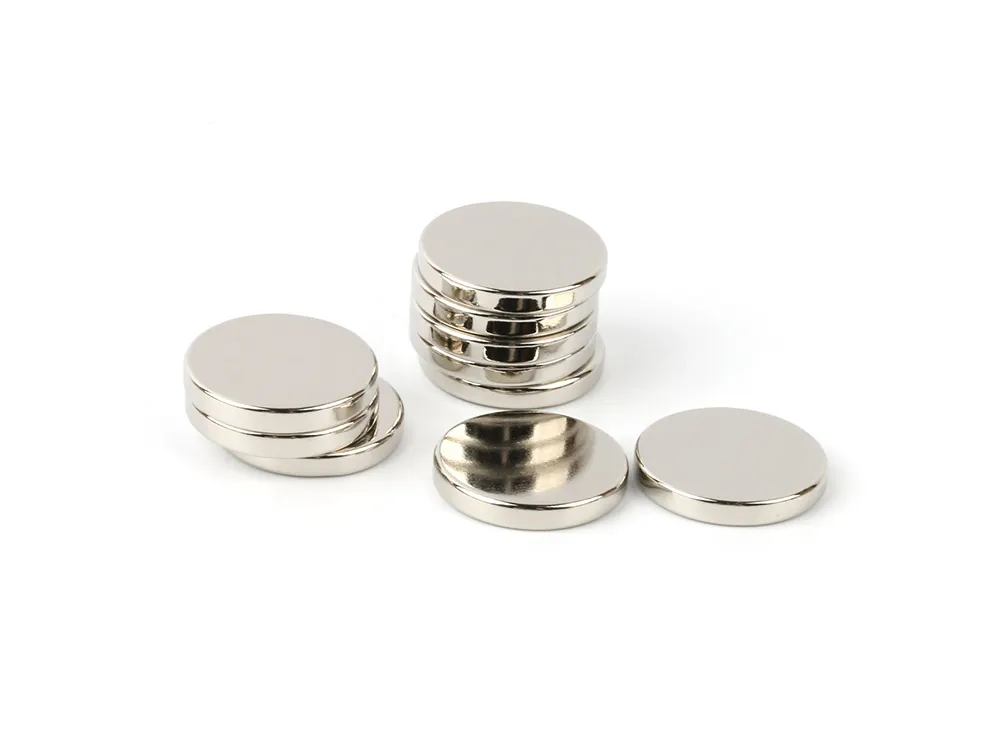
The global NdFeB magnet market has emerged as a cornerstone of high-tech manufacturing, driven by its unparalleled magnetic properties. In 2024, the market reached a valuation of $16.59 billion, with projections to surge to $28.8 billion by 2033 at a 6.3% CAGR. This growth trajectory underscores the material’s critical role in electrification, renewable energy, and miniaturized technologies.
From 2018–2023, the market grew at 5.2% CAGR, fueled by EVs and wind energy. The acceleration to 6.3% post-2025 stems from intensified policy support (e.g., global net-zero targets) and technological breakthroughs. Sintered NdFeB magnets, dominating 70% of applications, are projected to grow from $12B in 2024 to $20B in 2033, while bonded NdFeB segments target $6B via consumer electronics and automotive components.
-
Asia-Pacific (excl. China): Japan/South Korea lead high-performance magnets (Sumitomo, LG Innotek), while Southeast Asia focuses on downstream assembly.
-
North America: IRA incentives drive reshoring, with Magnequench and Hitachi Metals expanding to supply Tesla/GM.
-
Europe: EU’s Critical Raw Materials Act aims for 10% domestic production by 2030, with BMW-Volkswagen partnerships fueling growth.
Shenzhen AIM Magnetic, a leading Chinese manufacturer since 2006, leverages this ecosystem to deliver innovative neodymium magnets and magnetic tools, including MagSafe-compatible solutions and heavy-duty magnetic hooks.
China controls >75% of global NdFeB magnet production, enabled by:
-
Complete supply chain: 60% of global rare earth mining, vertical integration from extraction to magnet fabrication.
-
Industrial clusters: Ningbo (Yunsheng, Sanhuan), Ganzhou (rare earth reserves), and Shenzhen (AIM Magnetic) drive scale and innovation.
-
Policy support: "Made in China 2025" prioritizes high-performance magnets, with subsidies for R&D in rare earth recycling.
AIM Magnetic, headquartered in Shenzhen, offers custom neodymium magnets for EV components and consumer electronics. Its magnetic hooks, designed for durability, cater to commercial and DIY markets, including specialized fishing magnets.
-
U.S. initiatives: The IRA’s tax credits spur Magnequench’s Indiana expansion and Hitachi Metals’ Tennessee plant for EV motors.
-
EU strategies: The Magneto project aims to build a sustainable supply chain, while offshore wind projects (e.g., North Sea Hub) drive demand for large NdFeB magnets.
-
Challenges: Higher costs and limited rare earth processing hinder growth, though recycling R&D (e.g., EU’s WindChain) aims to mitigate reliance on China.
EVs account for 35% of NdFeB magnet revenue, projected to rise to 40% by 2033. Each passenger EV uses 2–5 kg of neodymium magnets in traction motors, with premium models (e.g., Tesla Model S Plaid) requiring 8 kg. Key drivers include:
-
Policy mandates: China’s NEV sales target (50% by 2030), EU’s 2035 zero-emission rule.
-
Technological innovation: Hairpin stator motors and SiC inverters boost efficiency, with Tesla’s 4680 battery design increasing magnet demand by 15%.
AIM Magnetic supplies high-performance neodymium magnets for EV motors, ensuring thermal stability and corrosion resistance. Its custom solutions for drive systems align with automakers’ needs for reliability in harsh environments.
Wind power contributes 20% of NdFeB demand, with offshore direct-drive generators using 5–10 tons of magnets per 10 MW turbine. Global wind capacity will hit 1.5 TW by 2030, requiring 150,000 tons/year of NdFeB. Notable projects include:
-
Dogger Bank Wind Farm (UK): 3.6 GW, demanding 18,000 tons of magnets.
-
China’s Zhangzhou Offshore Wind Farm: 10 GW, driving regional magnet orders.
AIM Magnetic’s specialized coatings protect offshore magnets from saltwater corrosion, supporting projects in Asia-Pacific and Europe. Its R&D in high-temperature magnets ensures performance in extreme climates.
Consumer electronics represent 15% of revenue, with smartphones, wearables, and audio devices relying on miniature NdFeB magnets. For example:
-
Smartphones: iPhone 15 uses 20+ neodymium magnets in cameras and haptics.
-
Wireless earbuds: AirPods leverage rare earth magnets for audio clarity.
AIM Magnetic’s ultra-thin MagSafe magnets (0.1 mm thickness) enable sleek designs for foldable phones and AR/VR headsets. The company’s focus on miniaturization aligns with trends in smartwatches and IoT devices, where space efficiency is critical.
Fluctuations in neodymium and dysprosium prices pose significant risks:
-
2022 peak: Neodymium oxide prices surged to $150/kg, increasing magnet costs by 30%.
-
Demand-supply imbalances: China’s 60% production dominance makes prices susceptible to policy shifts.
AIM Magnetic mitigates risks through long-term supply contracts, rare earth recycling R&D, and alternative material development. Its strategic reserves and optimized procurement models stabilize costs amid market volatility.
China’s stricter export regulations (e.g., 2023 license reforms) reshape supply chains:
-
Alternative sources: U.S. (Mountain Pass), Australia (Lynas), and Africa (Burundi) diversify supply.
-
Recycling push: EU targets 80% rare earth recycling from end-of-life magnets by 2030.
AIM Magnetic’s participation in domestic recycling initiatives ensures raw material security. The company’s focus on sustainable practices aligns with global ESG trends, positioning it as a reliable partner amid supply chain shifts.
The NdFeB magnet market’s trajectory from $16.59B to $28.8B by 2033 presents both opportunities and challenges. Companies like AIM Magnetic, leveraging China’s manufacturing prowess and investing in R&D, are well-positioned to lead in EVs, renewables, and advanced electronics. As global supply chains evolve, agility in raw material sourcing and technological innovation will define market leadership.