
EV Traction Motors’ Reliance on High-Grade NdFeB (N42-N52)
The performance of electric vehicles hinges on the capabilities of their traction motors, which convert electrical energy into mechanical power. These motors rely heavily on high-grade NdFeB magnets (N42-N52) to achieve optimal efficiency, power density, and torque.
The Magnetic Advantage of NdFeB Magnets
NdFeB magnets, composed of neodymium, iron, and boron, are the strongest type of permanent magnets available today. Their exceptional magnetic properties, including high remanence (Br), coercivity (Hc), and energy product (BH)max, make them ideal for applications requiring compact yet powerful magnetic solutions.
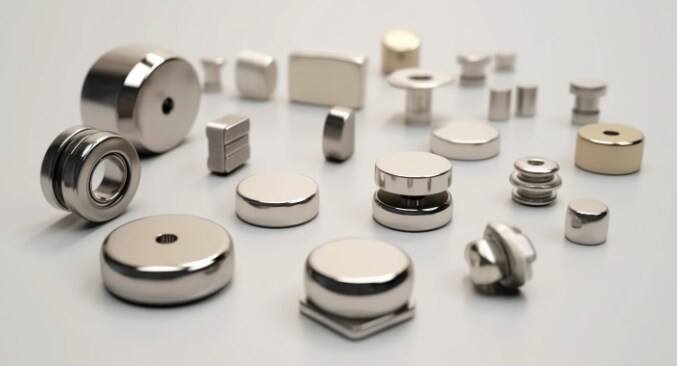
In EV traction motors, the use of N42-N52 grade NdFeB magnets offers several critical benefits:
- High Power Density: These magnets enable motors to deliver more power in a smaller package, reducing the overall size and weight of the drivetrain.
- Energy Efficiency: The strong magnetic field generated by NdFeB magnets minimizes energy losses, improving the motor’s efficiency and extending the vehicle’s range.
- Thermal Stability: Grades like N52 are engineered to maintain their magnetic properties at elevated temperatures, ensuring reliable performance under demanding conditions.
Design Considerations for EV Motors
Motor designers must carefully select the appropriate NdFeB grade based on factors such as operating temperature, required torque, and cost constraints. For instance:
- N42 Grade: Balances performance and cost, suitable for standard EV applications.
- N52 Grade: Offers the highest energy product, ideal for high-performance vehicles where maximizing power density is critical.
Companies like AIM Magnet specialize in manufacturing custom NdFeB magnets, providing tailored solutions for EV manufacturers. Their expertise in magnet design and material selection ensures optimal motor performance while meeting stringent industry standards.
The Impact on EV Performance
The integration of high-grade NdFeB magnets directly influences key metrics such as acceleration, range, and battery efficiency. For example:
- A Tesla Model 3’s traction motor uses NdFeB magnets to achieve a peak efficiency of over 97%, translating to a range of up to 358 miles on a single charge.
- The Audi e-tron GT relies on advanced NdFeB magnet technology to deliver 590 horsepower and accelerate from 0 to 60 mph in just 3.3 seconds.
Case Study: Anhui Hanhai’s Sintered Magnets for Energy-Efficient Motors
Anhui Hanhai Magnetic Technology, a leading manufacturer of sintered NdFeB magnets, has played a pivotal role in advancing EV motor technology. Their case study exemplifies how precision-engineered magnets enhance energy efficiency and performance.
Sintered NdFeB Manufacturing Process
Sintered NdFeB magnets are produced through a specialized process that involves:
- Powder Metallurgy: Fine neodymium, iron, and boron powders are mixed and pressed into shape.
- Sintering: The compacted powder is heated to high temperatures, forming a dense, crystalline structure.
- Machining and Coating: The magnet is precision-machined and coated to protect against corrosion and demagnetization.
This process results in magnets with exceptional magnetic properties and structural integrity, making them ideal for high-performance applications like EV motors.
Application in Energy-Efficient Motors
Anhui Hanhai’s sintered NdFeB magnets have been integrated into motors for several major EV manufacturers, including:
- BYD: Their Blade Battery-powered vehicles use Anhui Hanhai’s magnets to achieve over 95% motor efficiency.
- NIO: The ES8 SUV leverages these magnets to deliver a range of 311 miles and rapid acceleration.
These motors demonstrate how sintered NdFeB magnets enable significant improvements in energy conversion, reducing heat generation and extending battery life.
Collaborative Innovation
Anhui Hanhai collaborates closely with EV OEMs to optimize magnet design for specific motor architectures. For example:
- Custom magnetization patterns to enhance torque density.
- Advanced coatings to improve thermal stability and corrosion resistance.
Such partnerships highlight the importance of integrating magnet expertise into the broader EV development process.
OEM Challenges: Rare Earth Shortages Delaying Indian EV Production
The global transition to electric vehicles has exposed vulnerabilities in the rare earth supply chain, particularly affecting countries like India that rely heavily on imports.
The Rare Earth Dependency
NdFeB magnets require significant amounts of neodymium and dysprosium—two rare earth elements primarily mined and processed in China. Approximately 80% of the world’s rare earth supply originates from China, creating geopolitical and logistical challenges for EV manufacturers.
Impact on Indian EV Production
India’s ambitious plans to electrify its transportation sector have been hampered by:
- Supply Chain Disruptions: Trade tensions and export restrictions have led to shortages of high-grade NdFeB magnets.
- Cost Escalation: Prices for neodymium and dysprosium have fluctuated dramatically, increasing production costs for Indian OEMs like Tata Motors and Mahindra Electric.
- Production Delays: Several EV models have faced delays as manufacturers scramble to secure alternative magnet suppliers.
Mitigation Strategies
To address these challenges, India is exploring:
- Domestic Mining: Initiatives to develop rare earth mines in states like Odisha and Jharkhand.
- Recycling Technologies: Partnerships with companies like AIM Magnet to explore rare earth magnet recycling, which could recover up to 95% of critical elements from end-of-life magnets.
- Diversifying Supply Chains: Collaborations with countries like Australia and the United States to secure alternative sources of rare earths.
Alternatives: Ferrite Magnets’ Limitations in Efficiency and Size
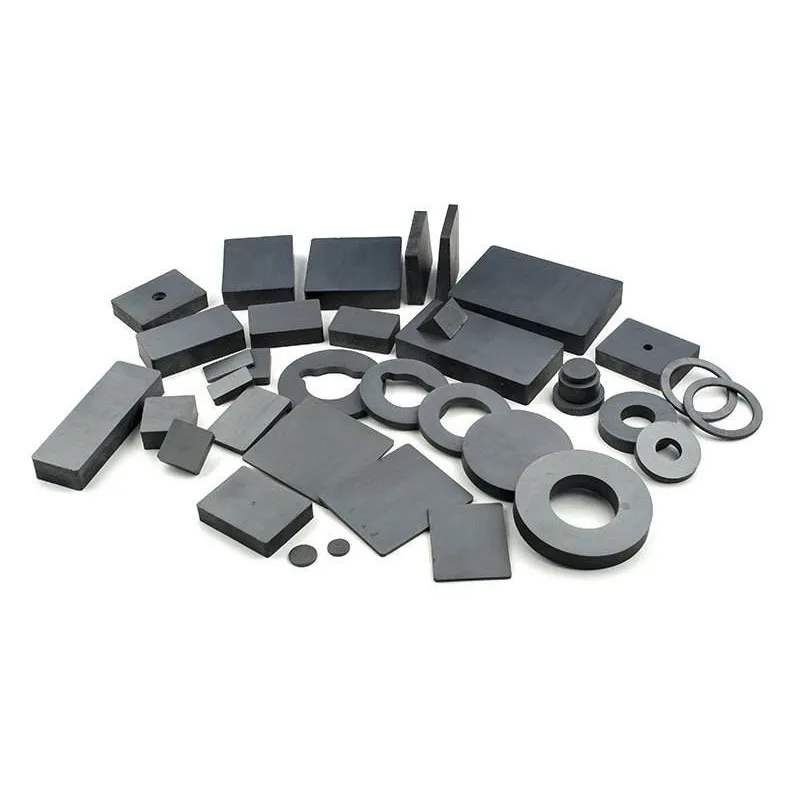
While ferrite magnets are a cost-effective alternative to NdFeB, their limitations make them unsuitable for high-performance EV applications.
Properties of Ferrite Magnets
Ferrite magnets, composed of iron oxide and barium or strontium, offer:
- Low Cost: Approximately 1/10th the cost of NdFeB magnets.
- Corrosion Resistance: Naturally resistant to rust and oxidation.
- Wide Availability: Raw materials are abundant and globally distributed.
However, their magnetic properties are significantly inferior to NdFeB:
- Lower Energy Product: Ferrite magnets have an energy product (BH)max of 1-5 MGOe, compared to 35-52 MGOe for NdFeB.
- Poor Thermal Stability: They lose magnetism at temperatures above 200°C, limiting their use in high-power applications.
Efficiency and Size Trade-offs
In EV traction motors, the use of ferrite magnets results in:
- Larger Motor Size: To achieve comparable torque, ferrite-based motors must be 2-3 times larger than NdFeB motors.
- Reduced Efficiency: Ferrite motors typically operate at 85-90% efficiency, compared to 95-97% for NdFeB motors.
- Lower Power Density: This translates to reduced acceleration and overall vehicle performance.
Applications Where Ferrite Magnets Excel
Despite their limitations, ferrite magnets remain suitable for:
- Low-Power Applications: Such as windshield wipers, power windows, and HVAC systems in vehicles.
- Cost-Sensitive Markets: Where range and performance are secondary considerations.
Conclusion
NdFeB magnets are indispensable to the success of electric vehicles, enabling the high efficiency and performance that consumers demand. While challenges such as rare earth shortages and material costs persist, innovations in magnet design, recycling, and alternative materials will shape the future of EV technology.
Companies like AIM Magnet continue to drive this evolution, providing advanced neodymium magnets and magnetic solutions that power the next generation of sustainable transportation. As the industry matures, the strategic balance between performance, cost, and sustainability will remain critical to accelerating the global adoption of electric vehicles.