

Why Do eVTOL Motors Depend on High-Performance NdFeB Magnets?
THE MAGNETIC TECHNOLOGY BEHIND THE LOW-ALTITUDE ECONOMY
Why Do eVTOL Motors Depend on High-Performance NdFeB Magnets?
MSUPER | Low-Altitude Economy · Permanent Magnet Motor Technology
From axial-flux motors to Halbach magnet arrays: how high-performance magnets support eVTOL and drone propulsion systems.
As flying cars move from concepts toward engineering validation, and drones expand beyond aerial photography into logistics, industrial inspection and emergency response, a key question emerges: How can aircraft propulsion systems become lighter and more efficient while delivering sufficient thrust and reliable operation?
For electric propulsion systems using permanent magnet motors, the answer depends not only on motor architecture, control algorithms and thermal management, but also on high-performance neodymium-iron-boron (NdFeB) permanent magnets.
From arc and sector-shaped rotor magnets to Halbach arrays in specialized magnetic circuits, these small components play a direct role in establishing the magnetic field and generating electromagnetic torque. MSUPER explores the underlying motor principles, magnet geometries, material selection and manufacturing processes.
01 | Why Does the Low-Altitude Economy Demand More from Motor Magnets?
Unlike ground vehicles, whose weight is supported by wheels, electric vertical take-off and landing (eVTOL) aircraft rely on propulsion systems to generate lift. Every part of the propulsion system therefore contributes to the aircraft weight budget.
- Power density: output power per unit motor mass.
- Torque density: torque delivered per unit mass or volume.
- Efficiency: how effectively electrical energy is converted into mechanical output, including losses.
- Reliability: stable operation under temperature rise, vibration and varying loads.
High-performance NdFeB magnets offer high remanence and maximum energy product, supporting higher air-gap magnetic flux density in permanent magnet motor designs. With appropriate magnetic circuit, winding and thermal designs, they can help improve torque density and compactness.
Important: improved magnet properties do not automatically produce proportional gains in motor power density or aircraft range. Actual benefits must be established through electromagnetic simulation, prototype testing and system-level validation.
02 | Core eVTOL Motor Architectures: Axial Flux vs. Radial Flux
Axial-flux motors (AFM)
Low-altitude electric aircraft can use different motor architectures. Axial-flux motors use magnetic flux primarily along the shaft axis and often feature a disc-shaped layout. Typical components include rotor discs and permanent magnets, a stator core or coreless winding, working air gaps on both sides, a shaft and bearings, and a housing with thermal-management features.
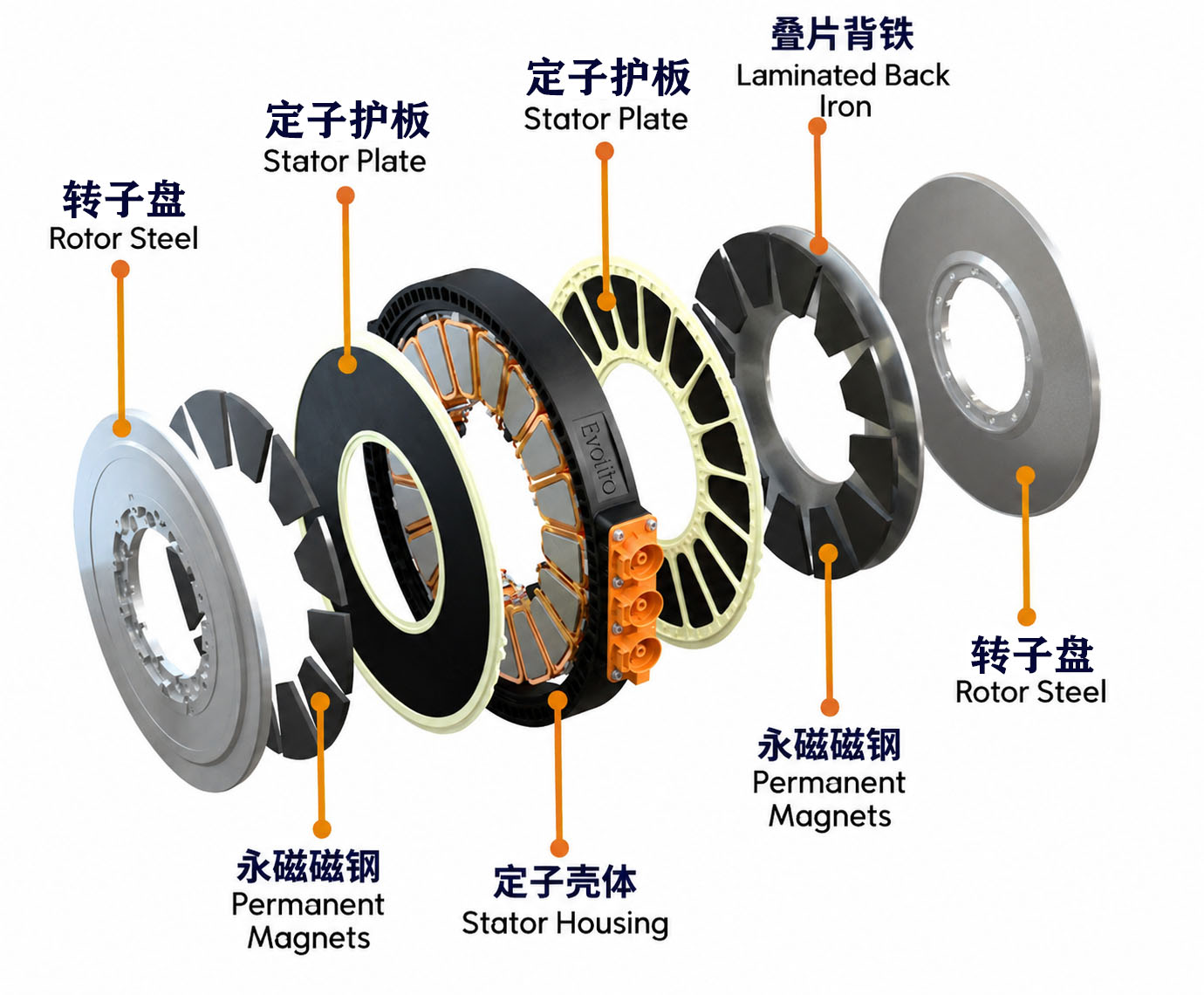
Figure 1. Exploded view of an axial-flux motor (original source illustration; original English labels retained).
An axial-flux motor can exploit a relatively large effective torque radius and may suit applications that require compact axial dimensions and high torque density.
Radial-flux motors
In a radial-flux motor, the main magnetic flux crosses the air gap radially. These motors commonly use cylindrical rotor and stator structures and benefit from mature design, processing and assembly practices across drones and industrial motors.
|
Comparison |
Axial-flux motor |
Radial-flux motor |
|
Main flux direction |
Axial |
Radial |
|
Typical form |
Flat, disc-shaped |
Cylindrical |
|
Common magnet shapes |
Sector, trapezoidal, segmented special shapes |
Arc, tile-shaped, rectangular |
|
Design strengths |
Potentially high torque density in selected topologies |
Mature processes and diverse structures |
|
Design challenges |
Axial forces, air-gap control, cooling, manufacturing precision |
End windings, rotor structure, high-speed mechanical constraints |
Technical takeaway: neither architecture is universally superior. Selection depends on speed, torque, cooling, available packaging space and cost.
03 | Why Is High-Temperature Demagnetization Resistance Critical?
Aircraft motors may operate at high loads for extended periods, undergo frequent acceleration and deceleration, and experience varying ambient temperatures. Magnets must provide sufficient magnetic field strength without suffering irreversible demagnetization from heat or opposing magnetic fields.
Three essential NdFeB parameters
- Remanence (Br): residual magnetic flux density under specified conditions, important to motor flux design.
- Intrinsic coercivity (Hcj): resistance to demagnetization, especially important under high temperatures and strong opposing fields.
- Maximum energy product ((BH)max): an indication of the maximum magnetic energy density, but not a standalone predictor of motor output.
|
Grade family |
Typical nominal maximum operating temperature* |
Selection focus |
|
N |
80°C |
Conventional temperatures |
|
M |
100°C |
Moderate temperature requirements |
|
H |
120°C |
Elevated temperatures |
|
SH |
150°C |
High-temperature motor applications |
|
UH |
180°C |
Higher demagnetization resistance |
|
EH |
200°C |
Demanding high-temperature conditions |
|
AH |
220°C |
Special high-temperature designs |
*These are common industry reference values, not guaranteed limits for every geometry or magnetic circuit. Actual allowable temperature depends on magnet shape, load line, reverse field and demagnetization curves and must be verified by engineering tests.
For eVTOL motors, selection should consider not only peak ambient temperature but also winding heating, actual rotor temperature, peak current and fault conditions. Buyers should request demagnetization curves, magnetic performance data at the target operating temperature and an appropriate reliability validation plan.
04 | Why Are Halbach Magnet Arrays of Interest?
A Halbach array combines magnets with different magnetization directions to shape the spatial magnetic field. Compared with arrangements magnetized in a single direction, a properly designed Halbach array can strengthen the field in the intended working region while weakening it on the opposite side.
- Increase effective magnetic flux density in the working air gap.
- Optimize magnetic-field waveform and improve torque behavior in certain motor topologies.
- Reduce reliance on rotor back iron in selected designs.
- Provide additional magnetic-circuit options for high torque density and lightweight construction.
A Halbach arrangement does not guarantee higher efficiency in every motor. Segment count, magnetization angles, air-gap dimensions and rotor mechanical strength affect performance. At high rotational speeds, magnet retention and centrifugal-load validation are particularly important.
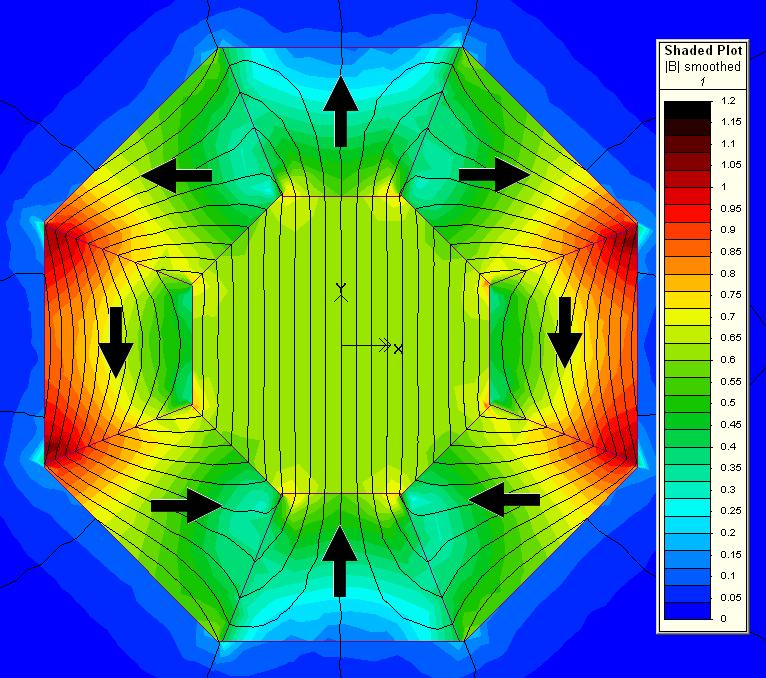
Figure 2. Original magnetic-field simulation illustration for a Halbach-related arrangement.
MSUPER technical focus: custom evaluation of magnetization directions, dimensional precision, segment arrangement and assembly for sector-shaped, arc-shaped and segmented magnets.
05 | Grain Boundary Diffusion: Balancing Magnetic Performance and Heat Resistance
Improving the demagnetization resistance of high-performance NdFeB does not necessarily require increasing heavy rare-earth content throughout the entire magnet. Grain boundary diffusion (GBD) is an important magnetic-property optimization technique.
Under suitable process conditions, selected elements diffuse along grain boundaries and modify the magnetic structure near grain edges, thereby increasing intrinsic coercivity (Hcj).
- Improved resistance to demagnetization: Hcj may be substantially improved in suitable material and process systems.
- More efficient use of rare-earth resources: compared with some bulk-alloying routes, heavy rare-earth consumption may be reduced.
- High-temperature motor options: provides a path to balancing magnetic performance, material cost and thermal stability.
Results depend on magnet thickness, diffusion depth, elemental system and heat treatment. Not every specification benefits equally. For eVTOL and drone motor magnets, assess GBD alongside measured demagnetization curves, temperature tests and magnetic-circuit simulations rather than relying on the process name alone.
06 | From Magnet Machining to Motor Assembly: Ensuring Reliability
1. Dimensional precision and consistent air gaps
Sector-shaped, arc-shaped and other custom magnets require control of dimensions, tolerances and geometry. Deviations can affect rotor assembly, air-gap uniformity and magnetic-field distribution.
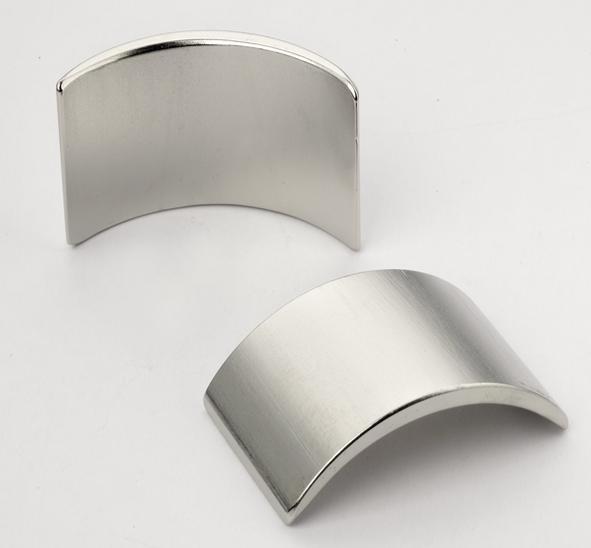
Figure 3. Original product photo of curved motor magnets.
2. Surface protection and corrosion resistance
Sintered NdFeB is vulnerable to corrosion, so protection should be selected for the intended environment. Common options include Ni-Cu-Ni plating and epoxy coatings; the choice depends on temperature, humidity, salt spray exposure and bonding processes.
3. Magnetization direction and pole consistency
For multipole motors and Halbach arrays, magnetization must match approved drawings. Dedicated fixtures may be needed to check pole orientation, surface magnetic-field distribution and consistency.
4. Rotor retention and high-speed reliability
Magnets experience centrifugal loads during high-speed rotation. Adhesive bonding, mechanical stops, sleeves or other retention methods should be evaluated with the motor design, alongside appropriate overspeed, vibration and thermal-cycling tests.
Technical priority: the magnet supplier and motor designer should jointly confirm material properties, dimensional tolerances, magnetization requirements and assembly conditions to develop a verifiable reliability plan.
07 | What Information Is Needed When Purchasing eVTOL and Drone Motor Magnets?
Specifying only “N52 magnets” or “high-temperature magnets” is usually insufficient for engineering quotation or selection. Recommended details include:
|
Category |
Required purchasing / engineering information |
|
Motor architecture |
Axial flux, radial flux, inner rotor or outer rotor |
|
Magnet shape |
Sector, arc, rectangular or other custom geometries |
|
Material grade |
N, SH, UH, EH, AH or specified magnetic properties |
|
Operating temperature |
Continuous and peak temperature, including duration |
|
Magnetization |
Direction, number of poles and pole-distribution drawing |
|
Dimensions |
Length, width, thickness, angles and geometric tolerances |
|
Surface protection |
Coating type, thickness and corrosion requirements |
|
Inspection |
Magnetic, dimensional, visual, environmental and reliability tests |
|
Purchasing |
Sample quantity, estimated annual volume and delivery requirements |
High-temperature, high-speed and safety-critical applications also require demagnetization margins, mechanical strength and relevant verification requirements.
08 | MSUPER: Custom Magnetic Material Solutions for Low-Altitude Propulsion
MSUPER is a magnetic materials brand of AIM Magnet Group, which has focused on sintered NdFeB magnets and magnetic assemblies since 2006. For high-performance motor applications, MSUPER concentrates on the following technical directions:
High-coercivity magnet development
Material selection and custom evaluation of SH, UH, EH and AH grade families for high-temperature motor requirements.
Precision machining of custom magnet shapes
Manufacturing solutions for sector-shaped, arc-shaped, rectangular and other special-geometry magnets for axial- and radial-flux motors.
Halbach arrays and magnetic assembly design
Evaluation of segmented magnets, magnetization directions and assembly methods based on customer pole layouts and installation requirements.
Surface finishing and quality control
Drawing on in-house electroplating and magnetic assembly processing capabilities to develop surface protection, dimensional inspection and magnetic testing plans suited to different environments.
From material selection and sample development to precision machining and assembly delivery, MSUPER aims to be a dependable magnetic materials partner for high-performance motor manufacturers.
Technical Conclusion
The growth of the low-altitude economy is driving innovation in aircraft and motor technology while imposing higher requirements on magnetic materials. Magnets suitable for high-performance flight motors must deliver more than strong magnetic force: demagnetization resistance, magnetic-circuit design, structural precision, thermal stability and long-term reliability are equally important.
If you are developing eVTOL motors, drone propulsion systems or other high-performance permanent magnet motors, share your drawings, magnetic-property targets and operating conditions with MSUPER to explore suitable magnetic solutions.
For Powerful Magnets, Choose MSUPER!
MSUPER — Custom Permanent Magnet Solutions for Advanced Electric Motors.
Original MSUPER contact and brand information image (retained without alteration).
PREV : None


