
How to Choose the Right NdFeB Magnet Supplier for Qi2 Wireless Charging Products
Aim Magnet Procurement Advisory Team
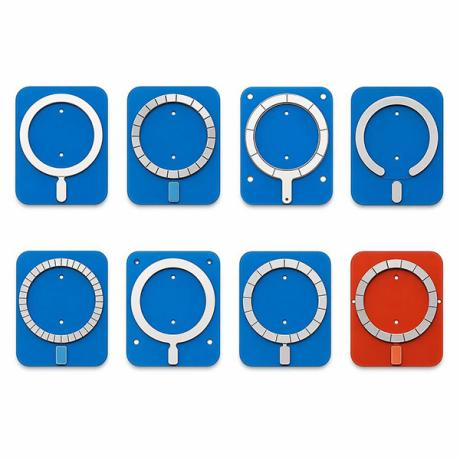
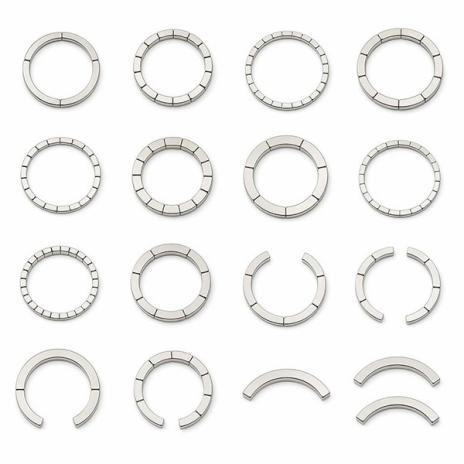
You've designed your Qi2 wireless charger. The PCB is laid out, the enclosure is tooled, and the bill of materials is 90% complete. Then comes the magnet ring — the component that determines whether your product snaps satisfyingly into alignment or limps along with weak, unreliable attachment.
Choosing the wrong magnet supplier can cascade into certification failures, production delays, and a 3.8-star Amazon rating. Here's how to make the right choice.
The 7-Point Magnet Supplier Evaluation Framework
1. Dimensional Precision: Can They Hold ±0.02 mm?
This is the non-negotiable starting point. Ask your potential supplier:
- What is your standard OD/ID tolerance? Expected: ≤ ±0.05 mm for Qi2 rings
- Do you offer ±0.02 mm as an option? Yes — signals premium capability
- How do you verify dimensions per batch? CMM or laser micrometer, not hand calipers
- What is your flatness specification? < 0.05 mm across the ring
2. Material Authenticity: N52 vs "N52"
The magnet industry has a well-known problem: grade inflation. An "N52" magnet from an unverified supplier may actually perform at N48 levels — or worse.
Required verification:
- BH curve tracer test: The only way to verify Br, Hcj, and BHmax
- XRF (X-ray fluorescence): Confirms elemental composition, detects impure rare earth content
- Gauss meter spot check: Quick field pass/fail — useful for incoming QC
- Cross-section SEM: Reveals grain structure, detects micro-cracks from poor sintering
Ask your supplier for a third-party BH curve test report for each magnet grade they quote. If they can't provide one, walk away.
3. Coating Quality: The Hidden Failure Mode
A magnet ring with poor coating will oxidize, swell, and lose strength within weeks in humid environments.
|
Coating Layer |
Min Thickness |
What It Protects Against |
|
Base layer (Ni) |
8–12 μm |
Primary corrosion barrier |
|
Intermediate (Cu) |
3–5 μm |
Pinhole sealing |
|
Top layer (Ni) |
5–8 μm |
Surface hardness, cosmetics |
|
Total |
≥ 15 μm |
— |
4. Certification Readiness
- Knows WPC Qi2 test requirements
- Provides pre-compliance magnetic field data
- REACH / RoHS compliance
- ISO 9001:2015 certified
5. Batch Consistency: The Real Test
A perfect prototype magnet is easy. 50,000 magnet rings with identical performance is hard.
|
Metric |
Industry Standard |
Aim Standard |
|
Gauss variation/batch |
±8% |
±3% |
|
OD/ID variation/batch |
±0.08 mm |
±0.03 mm |
|
Coating thickness variation |
±30% |
±10% |
6. Lead Time & Scalability
- Prototype (100–500 pcs): 2–3 weeks
- Pilot Run (5,000–10,000 pcs): 4–6 weeks
- Mass Production (50,000+/month): 6–8 weeks ongoing
7. Technical Support
- Magnetic simulation for your specific coil + case + magnet configuration
- DFM feedback before tooling
- English technical communication
- < 24h response on technical queries
The Cost of Getting It Wrong
|
Failure Mode |
Impact |
|
WPC certification failure |
4–8 week delay, $5K–$15K re-test |
|
Inconsistent holding force |
15–25% product return rate |
|
Coating failure in field |
Warranty claims, tropical market damage |
|
Supplier can't scale |
Missed launch window |
The magnet ring represents < 3% of BOM cost — but > 50% of UX differentiation.
Quick Decision Matrix
|
Your Priority |
Best Supplier Profile |
|
Fastest time-to-market |
Pre-certified standard Qi2 ring |
|
Maximum performance |
N52SH segmented arc, ±0.02mm |
|
25W Qi2.2 product |
N52SH grade, thermal simulation |


