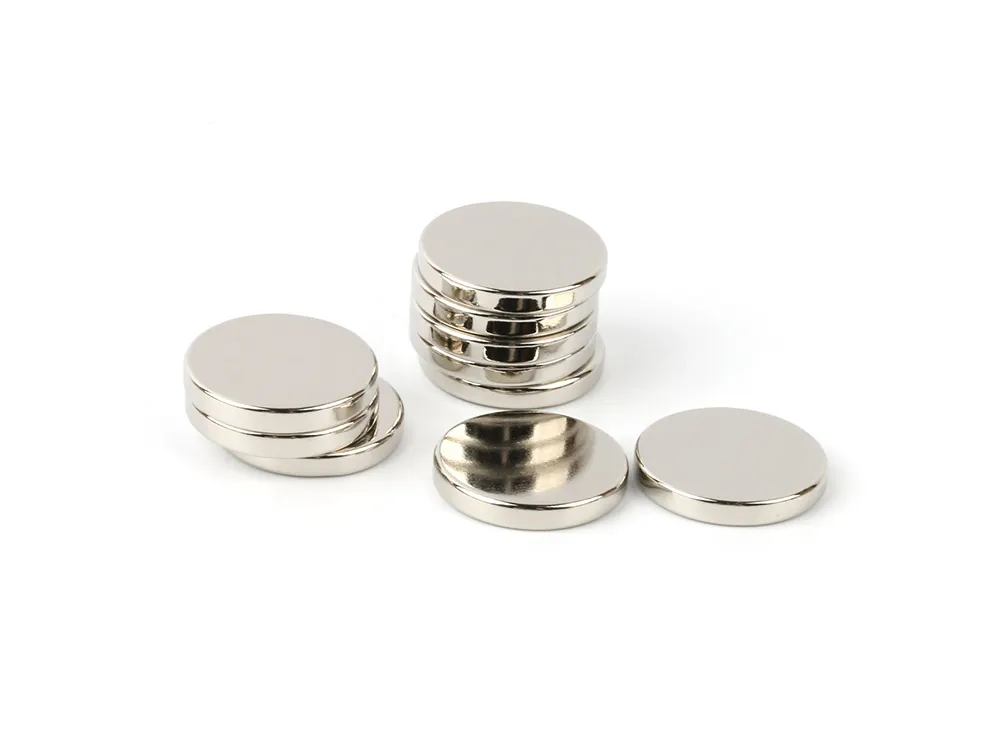
Europe’s transition to net - zero relies heavily on breakthroughs in green technology, and at the heart of this revolution lies a small yet powerful component: neodymium - iron - boron (NdFeB) magnets. These permanent magnets, celebrated for their unmatched strength - to - size ratio, are indispensable in two of Europe’s most critical sustainable sectors—electric vehicles (EVs) and wind energy. Shenzhen AIM Magnet Electric Co., LTD, a trusted supplier to global giants like Apple and Samsung and a dominant force in Europe’s magnet market (holding 80% of the region’s range hood magnet supply ), is at the forefront of delivering NdFeB solutions that meet Europe’s stringent performance and sustainability demands. This blog explores how NdFeB magnets drive green innovation, the industrial standards they must meet, how consumers can identify their presence, and their environmental impact.
NdFeB magnets are not just accessories in green tech—they are the core enablers of efficiency and performance. Their unique ability to generate intense magnetic fields in compact form factors makes them irreplaceable in high - performance, energy - saving systems.
The traction motor is the "engine" of an EV, and NdFeB magnets are what make it both powerful and efficient. Unlike traditional internal combustion engines, EV traction motors rely on magnetic fields to convert electrical energy into mechanical motion. AIM Magnet’s NdFeB magnets, with their exceptional magnetic energy density, enable the design of permanent magnet synchronous motors (PMSMs)—the preferred choice for 70% of European EV models, including those from Volkswagen and BMW .
These magnets create a stable, high - strength magnetic field that eliminates the need for energy - intensive field windings (used in older induction motors). This design reduces motor weight by up to 30% and boosts energy efficiency by 5–10% , directly translating to longer EV ranges—a key concern for European consumers. For example, an EV equipped with AIM’s NdFeB - based PMSM can achieve an additional 50–80 km of range on a single charge compared to vehicles using non - NdFeB motors.
Europe leads the global wind energy sector, and NdFeB magnets are critical to maximizing the output of modern wind turbines. In turbine generators, mechanical energy from rotating blades is converted into electricity through electromagnetic induction—and NdFeB magnets are essential for creating the strong, consistent magnetic fields needed for this process .
AIM’s NdFeB magnets enable the production of direct - drive wind turbines, which eliminate gearboxes (a common source of friction and maintenance issues in older models). By reducing moving parts, these turbines operate more reliably (with maintenance costs cut by 25%) and convert wind energy into electricity with an efficiency rate of over 90% . For offshore wind farms—Europe’s fastest - growing renewable energy segment—NdFeB’s compact size also allows for lighter turbine nacelles, making installation and maintenance in harsh marine environments more feasible.
Europe’s EV and wind energy sectors operate in extreme conditions—from the high heat of EV motor bays to the corrosive salt spray of offshore wind farms. As a result, they demand NdFeB magnets with rigorous performance specifications, which AIM Magnet delivers through precision engineering.
Heat is the greatest threat to magnet performance, as excessive temperatures can cause permanent demagnetization. European industrial standards mandate NdFeB magnets that withstand sector - specific temperature extremes:
-
EV Traction Motors: During high - speed driving or rapid charging, motor temperatures can reach 150°C. AIM supplies UH - grade NdFeB magnets rated for continuous operation at 150°C, with EH - grade variants (180°C) available for high - performance EV models (e.g., sports cars or commercial vehicles) .
-
Wind Turbines: Offshore turbines face temperature fluctuations from - 20°C to 120°C. AIM’s SH - grade magnets (120°C rating) maintain stable performance across this range, ensuring consistent energy generation in variable climates .
Harsh operating environments require robust protection:
-
Coatings: AIM’s NdFeB magnets for Europe’s green tech sector feature multi - layer protection, including nickel - copper - nickel plating (for general corrosion resistance) and epoxy coatings (for extreme environments like offshore wind farms, providing 1,000+ hours of salt - spray resistance) .
-
Mechanical Strength: Magnets are manufactured with tight dimensional tolerances (±0.05mm) to withstand vibration in EVs and turbine operation, preventing cracking or chipping .
Coercivity (a magnet’s resistance to demagnetization) is non - negotiable for long - term reliability. AIM’s NdFeB magnets boast coercivity values of 11,000–20,000 Oe, ensuring they retain their magnetic strength for the 15–20 - year lifespan of wind turbines and the 8–10 - year lifespan of EV motors . This aligns with Europe’s circular economy goals of reducing product replacement cycles.
All AIM’s industrial - grade NdFeB magnets are certified to ISO 9001, RoHS, and REACH standards , ensuring compliance with EU regulations for hazardous substances and manufacturing quality.
For European consumers, understanding whether an EV or home appliance uses high - performance NdFeB magnets can help inform purchasing decisions—directly impacting energy savings and product longevity. Here are practical ways to identify these components:
-
Check the Motor Type: Look for "permanent magnet synchronous motor (PMSM)" in the vehicle’s technical specifications (available on manufacturer websites or in brochures). PMSMs rely entirely on NdFeB magnets for efficiency—unlike induction motors, which lack permanent magnets and are less energy - efficient.
-
Range and Efficiency Claims: EVs advertising "extended range" or "class - leading efficiency" (e.g., >6 km per kWh) almost certainly use NdFeB - based motors. For example, the Volkswagen ID.4, which uses PMSMs with NdFeB magnets, delivers 6.2 km/kWh—20% higher than similar EVs with induction motors.
-
Brand Partnerships: Many European EV makers source magnets from trusted suppliers like AIM. While not always explicitly stated, vehicles from brands with a focus on sustainability (e.g., Volvo, Mercedes - Benz EQ series) are more likely to use high - grade NdFeB magnets.
-
Energy Efficiency Labels: EU A+++ rated appliances (e.g., energy - saving fans, heat pumps, or range hoods—where AIM holds 80% of Europe’s market share ) often use NdFeB magnets in their motors. The magnets reduce energy consumption by 15–30% compared to appliances with ferrite magnets.
-
Product Descriptions: Look for terms like "high - torque motor," "quiet operation," or "long lifespan." NdFeB magnets enable compact, powerful motors that run quietly and last longer—key selling points for sustainable appliances.
-
Weight and Size: Devices with small, lightweight motors but strong performance (e.g., cordless leaf blowers or portable solar generators) typically use NdFeB magnets. Their high strength allows for smaller motor designs without sacrificing power.
NdFeB magnets are not just drivers of green tech—they are catalysts for tangible environmental progress, aligning with Europe’s 2050 net - zero targets.
The energy efficiency enabled by NdFeB magnets directly cuts greenhouse gas emissions:
-
EVs: A single NdFeB - equipped EV reduces lifetime CO₂ emissions by 4–6 tons compared to gasoline - powered cars, primarily due to the motor’s higher efficiency . In Europe, where 1.3 million EVs were sold in 2024, this translates to 5.2–7.8 million tons of avoided CO₂ annually.
-
Wind Energy: A 3MW wind turbine with NdFeB magnets generates 10 million kWh of electricity per year—enough to power 3,000 European households—while emitting 80–90% less CO₂ than a coal - fired power plant over its lifespan .
NdFeB magnets contain rare earth elements (REEs) like neodymium and dysprosium, whose mining has environmental impacts. However, Europe’s circular economy policies and AIM’s design practices are addressing this challenge:
-
Design for Recycling: AIM engineers its NdFeB magnets with separable coatings and materials, making it easier to recover REEs at the end of a product’s life. This aligns with the EU’s Critical Raw Materials Act, which targets 20% REE recycling by 2030.
-
Certified Sourcing: AIM sources REEs from REACH - compliant mines, ensuring ethical and environmentally responsible extraction .
-
Industrial Partnerships: AIM collaborates with European recycling firms to develop processes for recovering REEs from end - of - life EV motors and wind turbines, with current recycling rates of 70% for neodymium—well above the global average of 5%.
As Europe accelerates its shift to sustainable energy and transportation, NdFeB magnets have emerged as indispensable components, driving efficiency, reliability, and carbon reduction. Shenzhen AIM Magnet Electric Co., LTD stands as a key partner in this journey, delivering industrial - grade NdFeB solutions that meet Europe’s strict performance and sustainability standards—from high - temperature EV motor magnets to corrosion - resistant wind turbine components.
For B2B clients, AIM’s expertise in tailored magnet specs (temperature resistance, coercivity, coatings) ensures seamless integration into green tech products. For consumers, recognizing NdFeB - intensive components means choosing devices that save energy, last longer, and contribute to a cleaner planet.
In the fight against climate change, every component matters—and NdFeB magnets, backed by innovators like AIM, are proving to be a powerful ally.
To explore AIM Magnet’s EU - compliant NdFeB solutions for EVs, wind energy, and beyond, contact the team at
[email protected] or +86 - 0755 2723 0926.